
Sabtu, 11 Juni 2016

Facebook Spent Rs. 300 Crores on Free Basics Ads in India: Report

Facebook is leaving no stone unturned to make its Free Basics campaign a hit in India. A new report has claimed that the social network has spent close to Rs. 300 crores on Free Basics ad campaigns in the country.

A recent Live Mint report citing media buyers estimates that of the Rs. 300 crores, Facebook spent in the range of Rs. 180-200 crores on print ads, which it claims is most for any medium. Facebook has been in recent weeks running full-page advertisements in multiple newspapers urging people to support its Free Basics campaign. A Facebook spokesperson in an emailed statement told Live Mint, "We're aiming to get the facts out to as many people as possible, whether they're connected today or will be in the future."

It's worth noting that Facebook has not refuted or supported any claims of the money it has spent on ad campaigns for Free Basics in India.

(Also see: Free Basics vs. Free Internet: Your Guide to the Raging Net Neutrality Debate)

Facebook's Free Basics campaign has been alleged to violate net neutrality by differentiating Internet access for certain types of services.

The Telecom Regulatory Authority of India (Trai) had last month floated a consultation paper on differential data pricing, with the last date for comments on December 30 and for counter comments on January 7. Facebook had launched its Save Free Basics campaign shortly after, urging users to send pre-written response to Trai on the paper. The company also started an email-based campaign recently.

Trai has received a record 2.4 million comments on the paper.

(Also see: Trai Receives 'Record Submissions' for Latest Net Neutrality Paper)

For those unaware, Facebook's Free Basics will allow access to content or apps hosted on it for free in partnership with a telecom operator. Presently, RCom is the only service provider in India offering Free Basics.

A survey firm recently claimed that a whopping 81 percent in a survey of 30,000 people had voted against Free Basics or any such programme and wanted an unbiased or neutral Internet for them. The survey was conducted by citizen engagement platform LocalCircles.

Trai was not amused with Facebook's attempt provide a template for its users without any comments on the issue, and asked users to send their own comments instead.

(Also see: Now, Facebook Launches Email Campaign to Save Free Basics)

IT industry body Nasscom notably also opposed Free Basics platform, saying that it violated net neutrality principles.

Download the Gadgets 360 app for Android and iOS to stay up to date with the latest tech news, product reviews, and exclusive deals on the popular mobiles.

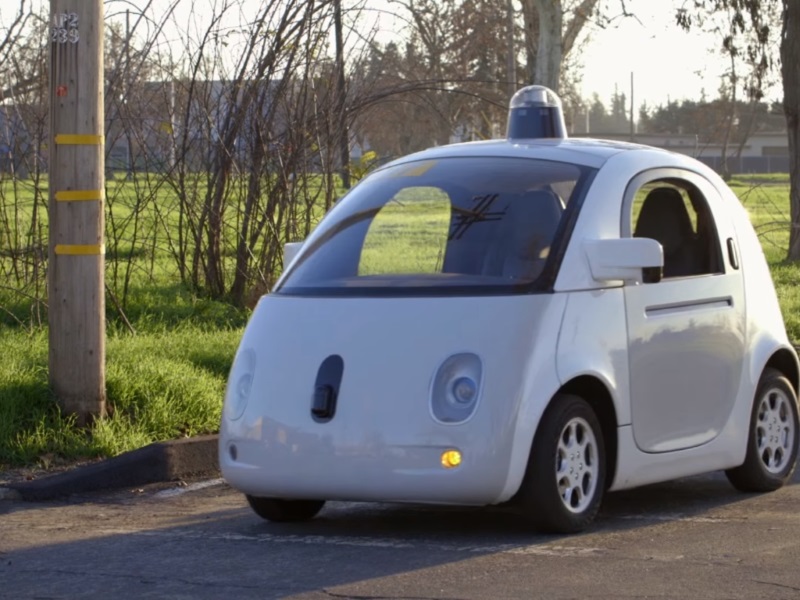
Smartphone-Based Systems for Better Driverless Cars Developed: Study

Researchers have developed two new smartphone-based systems that can accelerate development of driverless cars by identifying a user's location and orientation in places where GPS does not function.

These can also identify the various components of a road scene in real time on a regular camera or smartphone, performing the same job as sensors costing millions.

Although the systems cannot currently control a driverless car, the ability to make a machine "see" and accurately identify where it is and what it's looking at is a vital part of developing autonomous vehicles and robotics.

"Vision is our most powerful sense and driverless cars will also need to see but teaching a machine to see is far more difficult than it sounds," said professor Roberto Cipolla from University of Cambridge who led the research.

The first system, called SegNet, can take an image of a street scene it hasn't seen before and classify it, sorting objects into 12 different categories - such as roads, street signs, pedestrians, buildings and cyclists - in real time.

It can deal with light, shadow and night-time environments, and currently labels more than 90 percent of pixels correctly.

"Users can visit the SegNet website and upload an image or search for any city or town in the world, and the system will label all the components of the road scene. The system has been successfully tested on both city roads and motorways," the authors noted.

"It is remarkably good at recognising things in an image because it has had so much practice," added Alex Kendall, PhD student.

SegNet was primarily trained in highway and urban environments, so it still has some learning to do for rural, snowy or desert environments - although it has performed well in initial tests for these environments.

There are three key technological questions that must be answered to design autonomous vehicles: where am I, what's around me and what do I do next.

SegNet addresses the second question while a separate but complementary system answers the first by using images to determine both precise location and orientation.

The second localisation system runs on a similar architecture to SegNet and is able to localise a user and determine their orientation from a single colour image in a busy urban scene.

The system is far more accurate than GPS and works in places where GPS does not, such as indoors, in tunnels, or in cities where a reliable GPS signal is not available.

The localisation system uses the geometry of a scene to learn its precise location, and is able to determine, for example, whether it is looking at the east or west side of a building, even if the two sides appear identical.

"In the short term, we're more likely to see this sort of system on a domestic robot - such as a robotic vacuum cleaner, for instance," Cipolla added.

The researchers presented details of the two technologies at the International Conference on Computer Vision in Santiago, Chile, recently.

Download the Gadgets 360 app for Android and iOS to stay up to date with the latest tech news, product reviews, and exclusive deals on the popular mobiles.

Detachable Plane Invented to Save Lives in Case of Crashes

A Ukranian engineer has come up with the design of an aircraft with a detachable cabin which can be ejected at any time including during in-flight emergency situations and allow passengers to land safely even on water, according to a media report on Sunday.

The invention by Tatarenko Vladimir Nikolaevich could possibly save hundreds of lives in the event of a mid-air plane disaster, the mirror.co.uk reported.

Nikolaevich had been working on the project for the past three years and released the designs of his invention recently, the report said.

The detachable cabin of the plane could be ejected at any time during take off, mid-flight or landing and allow the passengers to land safely on water or on the ground due to parachutes attached to the cabin which would automatically open once the lower capsule is separated from the aircraft.

"Surviving in a plane crash is possible. While aircraft engineers all over the world are trying to make planes safer, they can do nothing about the human factor," Tatarenko told LiveLeak.

"The existing technology of using of Kevlar and carbon composites for fuselage, wings, flaps, spoilers, ailerons, tail will be used during the design," Tatarenko said. "It allows to partly compensate the weight of parachute system," he added.

The design includes a storage space that holds passengers' luggage underneath the cabin, so there won't be any lost luggage during the flight if it has to detach.

The new design is not the first invention of Tatarenko. Last year, Tatarenko received patents for an invention with an escape capsule system that would rescue passengers on board.

Download the Gadgets 360 app for Android and iOS to stay up to date with the latest tech news, product reviews, and exclusive deals on the popular mobiles.

Tencent Completes Acquisition of League of Legends Creator Riot Games

Back in February 2011, Chinese Internet giant Tencent purchased a majority stake in League of Legends studio Riot Games. Almost five years later it appears to have completely acquired the company. The news comes via an update on changes in how Riot Games will compensate employees.

"As a result of our continued growth and changing circumstances, we're shifting to a new structure to recognise and reward Rioters' contributions - and that first involves a big change to our existing equity program," the post reads. "As part of this effort, our majority investor, Tencent, recently purchased the remaining equity of Riot Games. This allows us to move away from a Riot equity program towards a cash-based incentive program that allows Rioters to share in Riot's success."

(Also see: This League of Legends Fix Might Make It Easier for You to Play the Game)

Earlier in the year, the company made it to Fortune's 100 Best Companies to Work For list, besting others like Twitter. However it's odd that news of it being completely acquired by WeChat maker Tencent was never formally announced, rather just an offhand mention in a post on its website.

(Also see: Riot Games Building Its Own Network to Make League of Legends Lag-Free)

Considering the grand, sweeping changes to League of Legends and that Riot has plans of building its own network, along with undying popularity of the game, it's no surprise that Tencent would want to profit from Riot's success and a complete acquisition is as good a way as any. Hopefully, it won't mean any untoward changes to a company that's been surprisingly successful even thought it just has a single game.

Download the Gadgets 360 app for Android and iOS to stay up to date with the latest tech news, product reviews, and exclusive deals on the popular mobiles.

Netflix Launched in India, Plans Start at Rs. 500 Per Month

Netflix has officially announced its entry into India and other markets in Asia, the Middle East, and Europe. The on-demand TV, movies, and video streaming powerhouse is nowavailable in the country, with plans starting at Rs. 500 per month for access on 1 SD screen. For Rs. 650 per month you can watch HD content on 2 screes at a time, and Rs. 800 per month will get you 4K content on up to 4 screens simultaneously.

The pricing is virtually identical to that in the US, where Netflix's Internet video streaming subscription rates range from $7.99 (Rs. 530 approximately) per month for 1 SD screen to $11.99 (approximately Rs. 800 per month approximately) a month for 4 HD screens, including a free one-month trial.

Netflix is in over 70 million homes worldwide and available via a variety of devices including Web, apps, mobile, media players, TVs, gaming consoles, and more. People watched over 12 billion hours of Netflix video in Q4 2015, Netflix CEO Reed Hastings said on Wednesday.

netflix_india_plans.png

Over the years, Netflix, which offers a collection of over 35,000 movies and TV shows, has started to produce its own shows under Netflix Original moniker. Some of these original shows include Orange is the New Black, Jessica Jones, and House of Cards. These shows have been faring well with users and experts alike. In fact, for the 73rd Golden Awards, which will be held on January 10, Netflix has eight nominations.

The company has major plans for 2016. It will be debuting its first talk show, and a movie starring Brad Pitt among others. Netflix has also reserved exclusive rights to releases from Walt Disney this year.

Slowing growth in the United States has put pressure on Netflix to grow internationally and India - with over 300 million Internet users and a potential 1.2 billion plus that could come online in the next few years - is being seen as its next big growth market. Before Wednesday's announcement, Netflix was available in North and South America, Australia, New Zealand, Japan, and parts of Europe. (See: Where is Netflix available?)

"Netflix is entering India at the right time," analyst Tarun Pathak at Counterpoint Technology Research told Reuters.

Netflix will compete in India with the likes of Star's Hotstar, Singapore-based Spuul, Hungama, Eros Now, Muvizz, and many others in what is becoming an increasingly crowded space in a country that remains bogged down by slow Internet speeds.

(Also see: Our 5 Favourite Movie Streaming Services in India)

For full coverage from the Consumer Electronics Show in Las Vegas, visit our CES 2016 hub.

Jumat, 10 Juni 2016

Australia's First Fire-Fighting Robot Unveiled

A fire-fighting robot that can sweep away obstacles and clear smoke from burning buildings is the latest weapon being used to fight fires in Australia's New South Wales (NSW) state.

NSW Emergency Services Minister David Elliot and Fire and Rescue Commissioner Greg Mullins unveiled the country's first remote-controlled firefighting robot, the Turbine Aided Firefighting machine (TAF 20) on Thursday, ABC reported.

The TAF 20 has bulldozer blades capable of moving cars out of the way and a high-powered fan to blow away smoke.

It can also spray water mist or foam from 60 metres and blast water for 90 metres.

The robot will be based at Alexandria in inner Sydney and can be quickly deployed by road or air to where it is needed, Commissioner Mullins said.

"It can be remotely operated up to 500 metres away and sent into situations where it is too dangerous for firefighters, which is a huge advantage as the safety of firefighters is my highest priority," he said.

The robot costs 310,000 Australian dollars (about $226,248 or roughly Rs. 1.5 crores) and was made and imported from Germany.

There is already one in use in Germany and one in Mexico.

It was put to the test last week at a Botany factory fire in Sydney, where Elliot said it proved its effectiveness.

"It will be of great use for our firefighters in battling other large and complex fires, including bushfires," Elliot added.

Download the Gadgets 360 app for Android and iOS to stay up to date with the latest tech news, product reviews, and exclusive deals on the popular mobiles.

Apple CEO Defends Smart Battery Case 'Hump'; Says You Shouldn't Use It Everyday

Apple CEO Tim Cook has defended the "hump" in its recently launched Smart Battery Case. He said that the much-derided hump in the company's new accessory is there because users aren't expected to be using it everyday.

Apple launched the Smart Battery Case earlier this week. The battery pack, which doubles as a smartphone case, comes with a peculiar hump at the back which isn't pleasing many. Responding to the criticism, Cook gave his take on the design, adding that users shouldn't be using the case so often - but only in situations where extended battery life is required, like hiking.

"You know, I probably wouldn't call it 'the hump,'" he told Mashable in an interview. "If you're charging your phone every day, you probably don't need this at all. But if you're out hiking and you go on overnight trips... it's kind of nice to have."

Cook, who said he was aware of people's comments on the design of the Smart Case Battery, also touted the design efforts the company has put in making the accessory. "One of the real insights here is, have you ever used other cases and tried to get them on?" Cook asked the interviewer. "In order to get it on, you'd find it very difficult to get it on and off. So the guys had this great insight to put the bend in along with making it a smart case," Cook explained.

The iPhone Smart Battery Case is the first product of its kind to be released by the company. It is priced at $99 (roughly Rs. 6,600). Several commentators and users alike have used the opportunity to point out design flaws in several other recent products, and question if the company has lost its ability to make beautiful products.

The Magic Mouse 2, which the company launched earlier this year, has its charging port at the bottom side, making it impossible to use when the device is charging. Some people have also mocked Apple for the way the Apple Pencil needs to be plugged into the iPad Pro for charging.

Download the Gadgets 360 app for Android and iOS to stay up to date with the latest tech news, product reviews, and exclusive deals on the popular mobiles.