Sabtu, 11 Juni 2016

Facebook Spent Rs. 300 Crores on Free Basics Ads in India: Report

Facebook is leaving no stone unturned to make its Free Basics campaign a hit in India. A new report has claimed that the social network has spent close to Rs. 300 crores on Free Basics ad campaigns in the country.

A recent Live Mint report citing media buyers estimates that of the Rs. 300 crores, Facebook spent in the range of Rs. 180-200 crores on print ads, which it claims is most for any medium. Facebook has been in recent weeks running full-page advertisements in multiple newspapers urging people to support its Free Basics campaign. A Facebook spokesperson in an emailed statement told Live Mint, "We're aiming to get the facts out to as many people as possible, whether they're connected today or will be in the future."

It's worth noting that Facebook has not refuted or supported any claims of the money it has spent on ad campaigns for Free Basics in India.

(Also see: Free Basics vs. Free Internet: Your Guide to the Raging Net Neutrality Debate)

Facebook's Free Basics campaign has been alleged to violate net neutrality by differentiating Internet access for certain types of services.

The Telecom Regulatory Authority of India (Trai) had last month floated a consultation paper on differential data pricing, with the last date for comments on December 30 and for counter comments on January 7. Facebook had launched its Save Free Basics campaign shortly after, urging users to send pre-written response to Trai on the paper. The company also started an email-based campaign recently.

Trai has received a record 2.4 million comments on the paper.

(Also see: Trai Receives 'Record Submissions' for Latest Net Neutrality Paper)

For those unaware, Facebook's Free Basics will allow access to content or apps hosted on it for free in partnership with a telecom operator. Presently, RCom is the only service provider in India offering Free Basics.

A survey firm recently claimed that a whopping 81 percent in a survey of 30,000 people had voted against Free Basics or any such programme and wanted an unbiased or neutral Internet for them. The survey was conducted by citizen engagement platform LocalCircles.

Trai was not amused with Facebook's attempt provide a template for its users without any comments on the issue, and asked users to send their own comments instead.

(Also see: Now, Facebook Launches Email Campaign to Save Free Basics)

IT industry body Nasscom notably also opposed Free Basics platform, saying that it violated net neutrality principles.

Download the Gadgets 360 app for Android and iOS to stay up to date with the latest tech news, product reviews, and exclusive deals on the popular mobiles.


Smartphone-Based Systems for Better Driverless Cars Developed: Study

Researchers have developed two new smartphone-based systems that can accelerate development of driverless cars by identifying a user's location and orientation in places where GPS does not function.

These can also identify the various components of a road scene in real time on a regular camera or smartphone, performing the same job as sensors costing millions.

Although the systems cannot currently control a driverless car, the ability to make a machine "see" and accurately identify where it is and what it's looking at is a vital part of developing autonomous vehicles and robotics.

"Vision is our most powerful sense and driverless cars will also need to see but teaching a machine to see is far more difficult than it sounds," said professor Roberto Cipolla from University of Cambridge who led the research.

The first system, called SegNet, can take an image of a street scene it hasn't seen before and classify it, sorting objects into 12 different categories - such as roads, street signs, pedestrians, buildings and cyclists - in real time.

It can deal with light, shadow and night-time environments, and currently labels more than 90 percent of pixels correctly.

"Users can visit the SegNet website and upload an image or search for any city or town in the world, and the system will label all the components of the road scene. The system has been successfully tested on both city roads and motorways," the authors noted.

"It is remarkably good at recognising things in an image because it has had so much practice," added Alex Kendall, PhD student.

SegNet was primarily trained in highway and urban environments, so it still has some learning to do for rural, snowy or desert environments - although it has performed well in initial tests for these environments.

There are three key technological questions that must be answered to design autonomous vehicles: where am I, what's around me and what do I do next.

SegNet addresses the second question while a separate but complementary system answers the first by using images to determine both precise location and orientation.

The second localisation system runs on a similar architecture to SegNet and is able to localise a user and determine their orientation from a single colour image in a busy urban scene.

The system is far more accurate than GPS and works in places where GPS does not, such as indoors, in tunnels, or in cities where a reliable GPS signal is not available.

The localisation system uses the geometry of a scene to learn its precise location, and is able to determine, for example, whether it is looking at the east or west side of a building, even if the two sides appear identical.

"In the short term, we're more likely to see this sort of system on a domestic robot - such as a robotic vacuum cleaner, for instance," Cipolla added.

The researchers presented details of the two technologies at the International Conference on Computer Vision in Santiago, Chile, recently.

Download the Gadgets 360 app for Android and iOS to stay up to date with the latest tech news, product reviews, and exclusive deals on the popular mobiles.

Detachable Plane Invented to Save Lives in Case of Crashes

A Ukranian engineer has come up with the design of an aircraft with a detachable cabin which can be ejected at any time including during in-flight emergency situations and allow passengers to land safely even on water, according to a media report on Sunday.

The invention by Tatarenko Vladimir Nikolaevich could possibly save hundreds of lives in the event of a mid-air plane disaster, the mirror.co.uk reported.

Nikolaevich had been working on the project for the past three years and released the designs of his invention recently, the report said.

The detachable cabin of the plane could be ejected at any time during take off, mid-flight or landing and allow the passengers to land safely on water or on the ground due to parachutes attached to the cabin which would automatically open once the lower capsule is separated from the aircraft.

"Surviving in a plane crash is possible. While aircraft engineers all over the world are trying to make planes safer, they can do nothing about the human factor," Tatarenko told LiveLeak.

"The existing technology of using of Kevlar and carbon composites for fuselage, wings, flaps, spoilers, ailerons, tail will be used during the design," Tatarenko said. "It allows to partly compensate the weight of parachute system," he added.

The design includes a storage space that holds passengers' luggage underneath the cabin, so there won't be any lost luggage during the flight if it has to detach.

The new design is not the first invention of Tatarenko. Last year, Tatarenko received patents for an invention with an escape capsule system that would rescue passengers on board.

Download the Gadgets 360 app for Android and iOS to stay up to date with the latest tech news, product reviews, and exclusive deals on the popular mobiles.

Tencent Completes Acquisition of League of Legends Creator Riot Games

Back in February 2011, Chinese Internet giant Tencent purchased a majority stake in League of Legends studio Riot Games. Almost five years later it appears to have completely acquired the company. The news comes via an update on changes in how Riot Games will compensate employees.

"As a result of our continued growth and changing circumstances, we're shifting to a new structure to recognise and reward Rioters' contributions - and that first involves a big change to our existing equity program," the post reads. "As part of this effort, our majority investor, Tencent, recently purchased the remaining equity of Riot Games. This allows us to move away from a Riot equity program towards a cash-based incentive program that allows Rioters to share in Riot's success."

(Also see: This League of Legends Fix Might Make It Easier for You to Play the Game)

Earlier in the year, the company made it to Fortune's 100 Best Companies to Work For list, besting others like Twitter. However it's odd that news of it being completely acquired by WeChat maker Tencent was never formally announced, rather just an offhand mention in a post on its website.

(Also see: Riot Games Building Its Own Network to Make League of Legends Lag-Free)

Considering the grand, sweeping changes to League of Legends and that Riot has plans of building its own network, along with undying popularity of the game, it's no surprise that Tencent would want to profit from Riot's success and a complete acquisition is as good a way as any. Hopefully, it won't mean any untoward changes to a company that's been surprisingly successful even thought it just has a single game.

Download the Gadgets 360 app for Android and iOS to stay up to date with the latest tech news, product reviews, and exclusive deals on the popular mobiles.

Netflix Launched in India, Plans Start at Rs. 500 Per Month

Netflix has officially announced its entry into India and other markets in Asia, the Middle East, and Europe. The on-demand TV, movies, and video streaming powerhouse is nowavailable in the country, with plans starting at Rs. 500 per month for access on 1 SD screen. For Rs. 650 per month you can watch HD content on 2 screes at a time, and Rs. 800 per month will get you 4K content on up to 4 screens simultaneously.

The pricing is virtually identical to that in the US, where Netflix's Internet video streaming subscription rates range from $7.99 (Rs. 530 approximately) per month for 1 SD screen to $11.99 (approximately Rs. 800 per month approximately) a month for 4 HD screens, including a free one-month trial.

Netflix is in over 70 million homes worldwide and available via a variety of devices including Web, apps, mobile, media players, TVs, gaming consoles, and more. People watched over 12 billion hours of Netflix video in Q4 2015, Netflix CEO Reed Hastings said on Wednesday.

netflix_india_plans.png

Over the years, Netflix, which offers a collection of over 35,000 movies and TV shows, has started to produce its own shows under Netflix Original moniker. Some of these original shows include Orange is the New Black, Jessica Jones, and House of Cards. These shows have been faring well with users and experts alike. In fact, for the 73rd Golden Awards, which will be held on January 10, Netflix has eight nominations.

The company has major plans for 2016. It will be debuting its first talk show, and a movie starring Brad Pitt among others. Netflix has also reserved exclusive rights to releases from Walt Disney this year.

Slowing growth in the United States has put pressure on Netflix to grow internationally and India - with over 300 million Internet users and a potential 1.2 billion plus that could come online in the next few years - is being seen as its next big growth market. Before Wednesday's announcement, Netflix was available in North and South America, Australia, New Zealand, Japan, and parts of Europe. (See: Where is Netflix available?)

"Netflix is entering India at the right time," analyst Tarun Pathak at Counterpoint Technology Research told Reuters.

Netflix will compete in India with the likes of Star's Hotstar, Singapore-based Spuul, Hungama, Eros Now, Muvizz, and many others in what is becoming an increasingly crowded space in a country that remains bogged down by slow Internet speeds.

(Also see: Our 5 Favourite Movie Streaming Services in India)

For full coverage from the Consumer Electronics Show in Las Vegas, visit our CES 2016 hub.

Jumat, 10 Juni 2016

Australia's First Fire-Fighting Robot Unveiled

A fire-fighting robot that can sweep away obstacles and clear smoke from burning buildings is the latest weapon being used to fight fires in Australia's New South Wales (NSW) state.

NSW Emergency Services Minister David Elliot and Fire and Rescue Commissioner Greg Mullins unveiled the country's first remote-controlled firefighting robot, the Turbine Aided Firefighting machine (TAF 20) on Thursday, ABC reported.

The TAF 20 has bulldozer blades capable of moving cars out of the way and a high-powered fan to blow away smoke.

It can also spray water mist or foam from 60 metres and blast water for 90 metres.

The robot will be based at Alexandria in inner Sydney and can be quickly deployed by road or air to where it is needed, Commissioner Mullins said.

"It can be remotely operated up to 500 metres away and sent into situations where it is too dangerous for firefighters, which is a huge advantage as the safety of firefighters is my highest priority," he said.

The robot costs 310,000 Australian dollars (about $226,248 or roughly Rs. 1.5 crores) and was made and imported from Germany.

There is already one in use in Germany and one in Mexico.

It was put to the test last week at a Botany factory fire in Sydney, where Elliot said it proved its effectiveness.

"It will be of great use for our firefighters in battling other large and complex fires, including bushfires," Elliot added.

Download the Gadgets 360 app for Android and iOS to stay up to date with the latest tech news, product reviews, and exclusive deals on the popular mobiles.

Apple CEO Defends Smart Battery Case 'Hump'; Says You Shouldn't Use It Everyday

Apple CEO Tim Cook has defended the "hump" in its recently launched Smart Battery Case. He said that the much-derided hump in the company's new accessory is there because users aren't expected to be using it everyday.

Apple launched the Smart Battery Case earlier this week. The battery pack, which doubles as a smartphone case, comes with a peculiar hump at the back which isn't pleasing many. Responding to the criticism, Cook gave his take on the design, adding that users shouldn't be using the case so often - but only in situations where extended battery life is required, like hiking.

"You know, I probably wouldn't call it 'the hump,'" he told Mashable in an interview. "If you're charging your phone every day, you probably don't need this at all. But if you're out hiking and you go on overnight trips... it's kind of nice to have."

Cook, who said he was aware of people's comments on the design of the Smart Case Battery, also touted the design efforts the company has put in making the accessory. "One of the real insights here is, have you ever used other cases and tried to get them on?" Cook asked the interviewer. "In order to get it on, you'd find it very difficult to get it on and off. So the guys had this great insight to put the bend in along with making it a smart case," Cook explained.

The iPhone Smart Battery Case is the first product of its kind to be released by the company. It is priced at $99 (roughly Rs. 6,600). Several commentators and users alike have used the opportunity to point out design flaws in several other recent products, and question if the company has lost its ability to make beautiful products.

The Magic Mouse 2, which the company launched earlier this year, has its charging port at the bottom side, making it impossible to use when the device is charging. Some people have also mocked Apple for the way the Apple Pencil needs to be plugged into the iPad Pro for charging.

Download the Gadgets 360 app for Android and iOS to stay up to date with the latest tech news, product reviews, and exclusive deals on the popular mobiles.

EU Plans to Make Netflix, BBC iPlayer Available Abroad

The EU unveiled plans on Wednesday that would allow travellers to get online streaming services like Netflix or BBC iPlayer when abroad by 2017, something currently blocked by complex copyright rules.

Europeans spend about one billion nights in other EU countries every year but face a frustrating inability to watch films and sports or listen to music on an iPad or laptop when they travel outside their home country.

"People who legally buy content - films, books, football matches, TV series - must be able to carry it with them anywhere they go in Europe," said Andrus Ansip, the European Commission's Vice President for the digital single market.

"We want to ensure the portability of content across borders."

As it stands, subscribers to the Netflix or Amazon streaming service in, for example, Britain, cannot use the service when they travel to another country. The services in different countries also currently have different content.

In another example, digital subscribers to Sky Sports in London are unable to access Premier League football matches when travelling abroad.

The commission, the executive body of the 28-country EU, said the ability of Europeans to enjoy subscriptions to these services while still in the bloc was "a new EU right for consumers".

'Complex technical issues'
The proposal now goes to the European parliament and EU member states for approval, which the commission hopes will come next year, with final implementation of the rules in 2017.

That is the same year that the EU is set to end mobile phone roaming charges.

The British Broadcasting Corporation, the largest public broadcaster in the world, welcomed the impact on its iPlayer service, which only people living in Britain are currently able to use.

"We are interested in being able to allow UK licence-fee payers to access BBC iPlayer while they are on holiday in the EU, and welcome the European Commission proposing regulation to help make this possible," a BBC statement said.

"There are complex technical issues to resolve and aspects of the Commission's proposal need clarification."

EU officials said the BBC service would need to introduce a system that verifies the country of residence of users, which services like Netflix and Amazon already have.

Critics argued that the proposal lacked ambition and addressed only the narrow concerns of subscribers who could afford the big fees demanded by the streaming services.

"Overall, the copyright reform proposals are a far cry from commitment by Commission president (Jean-Claude) Juncker to 'break down national silos' in copyright and ignore many demands made by the EU Parliament," said Julia Reda, a leading Greens MEP on the issue.

'Just an appetiser'
But the commission said the so-called "portability" issue is only the first step towards a far more controversial plan by the EU to overhaul the EU's complex copyright rules, part of a scheme to create a single digital market in Europe.

"The proposal... is just an appetiser, the main course will come in 2016," said the EU's Digital Commissioner Guenther Oettinger.

The European Union is the world's biggest economy, but despite its 500 million potential consumers, digital services remain confined to national borders, with separate accounts and proof of residency required from one country to another.

In May the EU launched an anti-trust inquiry into the online shopping marketplace over the restrictions it places on people in one country being able to buy goods from another.

It is focused on electronics, clothes, shoes and digital content.

But media companies are extremely reluctant to break the status quo especially in France, where protecting French culture is an important government priority.

"In the digital economy, licensing distribution rights by territory remains fundamental to the financing, production and distribution of content not just in the EU, but worldwide," said Benoit Ginisty of the International Federation of Film Producers Association, a lobby in Brussels.

Download the Gadgets 360 app for Android and iOS to stay up to date with the latest tech news, product reviews, and exclusive deals on the popular mobiles.

Google Recaps Its Efforts to Fight Unwanted Software in 2015

Google has been working behind-the-scenes to improve the Web, with its recent efforts focused against 'unwanted software' or UwS. However, it is still receiving complaints from users. On Wednesday, the search giant elaborated on its efforts to eliminate UwS from the Web and gave some statistics as well.

In the past one year, Google has included UwS in Safe Browsing and its API, which together resulted in showing users a warning message when visiting sites that contain UwS. It also launched Chrome Cleanup Tool, which as per the company is a "one-shot UwS removal tool that has helped clean more than 40 million devices." The firm also started using UwS as a signal in search to identify deceptive sites. It even started disabling Google ads that lead to sites with UwS downloads.

According to Google, all these changes "have already begun to move the needle." The UwS-related Chrome user complaints have fallen from 40 percent to 20 percent. The search giant besides showing over 5 million Safe Browsing warnings per day on Chrome regarding UwS, has also helped over 14 million users to remove more than 190 deceptive Chrome extensions from the devices. The number of UwS warning messages seen via AdWords has also seen a decline by 95 percent as compared to last year.

The Sundar Pichai-led company, however, still has to work a lot. "20% of all feedback from Chrome users is related to UwS and we believe 1 in 10 Chrome users have hijacked settings or unwanted ad injectors on their machines. We expect users of other browsers continue to suffer from similar issues; there is lots of work still to be done," adds the company blog post. "We're still in the earliest stages of the fight against UwS, but we're moving in the right direction. We'll continue our efforts to protect users from UwS and work across the industry to eliminate these bad practices."

Download the Gadgets 360 app for Android and iOS to stay up to date with the latest tech news, product reviews, and exclusive deals on the popular mobiles.
PS4's Sharefactory Video Editing App Gets New Features, Hits 5.1 Million Downloads

Sony's Sharefactory video editing app for the PS4 just received a massive update. You can now add slow motion and time lapse effects to your videos. According to Stuart Platt, Senior Producer at Sony Computer Entertainment America, it's been a popular request from vocal PS4 users.

In addition to this, there will be Sharefactory Events. These will be conducted by game developers and publishers, allowing you to show off your editing skills. As per Platt's post on the PlayStation blog, the first event is being planned and will happen soon. Furthermore, you can now add up to 50 video clips to a Sharefactory project and up to 12 music track clips as well.

There are other changes. Text is now referred to as overlays, and stickers can be layered. Two music tracks, three filter effects, three wipe transitions, five dissolve transitions, a new colour picker, and an enhanced text colour palette also are present with the latest update.

Perhaps the most telling piece of information is how Sharefactory is performing.

"Since launch, we've seen an explosive growth, with more than 5.1 million downloads of the Sharefactory app, and more than 18.9 million awesome projects created by our PlayStation Nation," wrote Platt in his post. Even with over 30 million PS4s sold, it's not too surprising to see so few with the Sharefactory app. Although sharing game videos and screenshots is a heavily touted feature, not everyone is inclined to do so, and Sharefactory's prevalence, or lack thereof, cements this.

Download the Gadgets 360 app for Android and iOS to stay up to date with the latest tech news, product reviews, and exclusive deals on the popular mobiles.

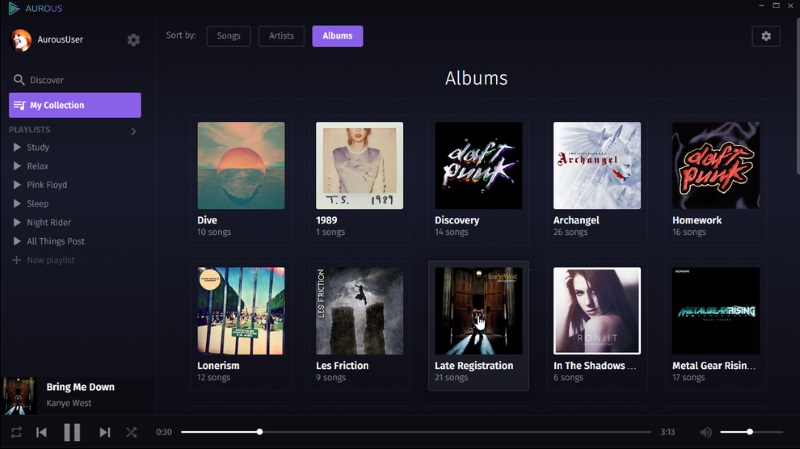
Aurous Music Streaming Search Engine to Shut Down After Copyright Suit

Aurous, an upstart music site that described itself as a search engine for the growing field of streaming, agreed Wednesday to shut down after copyright suits from major labels.

Aurous, launched in October by 20-year-old Miami-based coder Andrew Sampson, allows users to search for music across all available online platforms and then click on links to listen.

Sampson had described Aurous as a sort of search engine that could become a one-stop site for music fans, who could also import playlists from other platforms.

But a court temporarily stopped the site within days of its launch after a joint lawsuit by the major record labels, which said that Aurous offered access to pirated material.

In a settlement submitted to a federal court in Miami on Wednesday, Aurous agreed to shut down permanently and pay $3 million (roughly Rs. 20 crores) in damages to the labels.

"We hope this sends a strong signal that unlicensed services cannot expect to build unlawful businesses on the backs of music creators," Cary Sherman, chairman and CEO of the Recording Industry Association of America trade group, said in a statement.

Aurous shortly afterward wrote on Twitter: "We've closed up shop.... It was fun, guys!"

In earlier court testimony, Sampson said he was unaware of copyright violations as Aurous had no control over users' searches or power to remove material from third-party sites.

Streaming sites such as Spotify, Deezer and Tidal - which allow unlimited, on-demand music - have grown rapidly in the past several years with many in the music industry seeing the services as the future.

But the industry has also been aggressive in shutting down sites if they do not pay back royalties.

Grooveshark, an early streaming site that was also started by young entrepreneurs in Florida, closed down earlier this year after years of litigation.

Grooveshark, which claimed 30 million monthly users, allowed listeners to upload material to the site, even when copyrighted.

Download the Gadgets 360 app for Android and iOS to stay up to date with the latest tech news, product reviews, and exclusive deals on the popular mobiles.

News Micro-Payments Site 'Blendle' to Launch in US

Online news startup Blendle, which allows users to make small payments to read individual articles, announced plans Wednesday to launch next year in the United States.

Blendle, a Dutch-based service which has been operating in the Netherlands and Germany, hopes the "micro-payments" model can help struggling news organizations as an alternative to "paywalls" or digital subscriptions, said co-founder Alexander Kloepping.

While paywalls have become more common in the United States, Kloepping said, "some of the best content is only available behind those paywalls, doesn't go on the Web until days after publication in print newspapers and magazines and is still viewed through an array of intrusive ads."

He said Blendle helps users "find the most interesting stories every day" by "looking specifically at each reader's tastes, along with the tastes of their friends, and by employing editors that hand-pick the best stories from premium sources."

The New York Times and German digital publisher Axel Springer agreed last year to invest in the platform, which Kloepping founded along with another young Dutch journalist, Marten Blankesteijn.

Blendle signed up major publishers in Germany and the Netherlands, as well as big names like The Washington Post, The Wall Street Journal and The Economist.

It has over 500,000 users in the two European countries.

Kloepping told AFP that Blendle expects to charge 20 to 30 cents for US newspaper articles and 25 to 40 cents for magazine stories, similar to the rates in Europe. Publishers keep 70 percent of revenue, with Blendle getting the rest.

"People are ready to pay for that but it needs to be easy," he said. "It needs to be done well. It needs good technology. And that's what we're trying to do."

Blendle will initially seek to bring on major national publications and then smaller, regional and local ones.

Blendle frees users of the need to sign up to costly digital subscriptions for each publication. Readers can buy articles with one click, view them without ads and obtain an instant refund if they are not satisfied.

"In an age of ad blockers and paywalls, many publishers are struggling to find out how to monetize their content. Blendle started as a big experiment in Europe, but it's working," said Kloepping.

By simplifying the readers' experience, he said, "We've proven that we can get young people to pay for high-quality journalism."

Download the Gadgets 360 app for Android and iOS to stay up to date with the latest tech news, product reviews, and exclusive deals on the popular mobiles.
Microsoft's Think Next Forum Concludes, 8 Startups Graduate

Think Next 2015 - a forum that brought thought leaders in technology driving transformation via innovation together under one roof - concluded here on Wednesday.

The forum not only saw the participation of more than 800 delegates from leading corporates, investors, thought leaders and delegates from Microsoft who partnered to push the collaborative innovation agenda for the ecosystem, but also witnessed the graduation of Microsoft Ventures' winter batch 2015.

Eight certified graduating startups from the batch, namely, Canvasflip, Cloudcherry, Shotang, Flutura, KNOLSKAPE, Vymo, Vakilsearch and Vigyanlabs showcased their innovative solutions.

Meanwhile, two senior leaders - Steven Guggenheimer, corporate vice president and chief evangelist at Microsoft, and Scott Coleman, general manager, Microsoft Ventures shared lessons they learnt while working with entrepreneurs across the globe.

A round table focused on topics such as current valuation levels, potential Initial Public Offerings, Unicorns in the venture market and mergers.

Unicorn is a term in the investment industry, in particular venture capital industry, which denotes a start-up company whose valuation has exceeded $1 billion (roughly Rs. 6,675 crores).

A session 'Fireside Chat with Author Devdutt Pattanaik' discussed the lessons budding entrepreneurs could derive from mythology and stories passed down the generations.

Download the Gadgets 360 app for Android and iOS to stay up to date with the latest tech news, product reviews, and exclusive deals on the popular mobiles.

Microsoft Accidentally Unveils Edge Browser Extension Support; Tips Imminent Launch

Microsoft Edge may get support for extensions sooner than expected. The company had announced that it would add support for add-ons to its newly launched Web browser in 2016, but this week it accidentally made live a preview site announcing the support, suggesting an imminent rollout.

A long time Microsoft watcher who goes by the alias WalkingCat on Twitter discovered the preview site. The webpage, which seems to be aimed at developers, announces the support for extensions for Microsoft Edge. The portal also offers Reddit's Enhancement Suite and Pinterest's Pin It Button extensions for manual download, along with instructions to assist users with installing the extensions.

"Extensions are here! Beginning with Build XXXXX in Windows 10 Technical Preview, a selection of extensions are available for Microsoft Edge... Maybe some text here about new extensions coming in future updates, and how you can get started on writing your own?" the description read. The company has since taken down the preview website.

(Also see: Microsoft Edge Browser Gets EdgeHTML 13; Blocks Support for Toolbars)

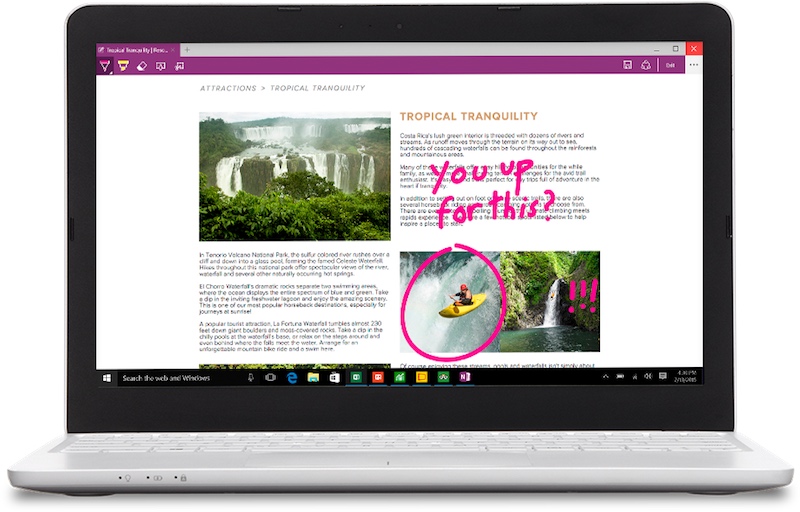
Microsoft debuted the Edge browser as the default browser of Windows 10. Edge offers a range of features including Cortana integration and offers the ability to add annotations on the Web page. Support for extensions, however, was a major feature Edge is currently missing. The company had previously announced that it would add that support this year, but later delayed the rollout plans to 2016.

The company has previously said that Microsoft Edge will support Chrome and Firefox extensions. While it has remained tight-lipped around it since then, the prolific leakster compared the extensions for Chrome and Microsoft Edge. "Comparing Edge version vs. Chrome version of same extension, basically substitute "chrome" with "msBrowser", add few minor changes, done."

Download the Gadgets 360 app for Android and iOS to stay up to date with the latest tech news, product reviews, and exclusive deals on the popular mobiles.

PS4 Buy One Get One Free Digital Sale Now Live

While Microsoft India went to town with Black Friday digital deals, Sony India was surprisingly quiet. Not any more. We were checking out the Indian PlayStation Store and were pleased to see a rather sweet deal for those who have the capacity to buy games digitally.

Until December 25, 5:29am IST, you can buy one game and get the other free on the PlayStation Network. These include a titles such as sleeper hit Until Dawn, The Order:1886, Watch Dogs, Middle-earth: Shadow of Mordor, and Evolve to name a few. If you're a PS3 or PS Vita owner, you're out of luck. This is for PS4 games only.

(Also see: PS4 or Xbox One? We Help You Decide)

To avail of this offer, simply add two or more products to your shopping cart on the PlayStation store and use the code J7P8G8P3DH to get one game free. There's some legal fine print to go with it on another page obviously, which you can check out here. What's important to note is that the discount code will apply to the cheapest product in the card and that this does not work for pre-orders.

Also, according to the PlayStation blog, you can use the discount code for as many times as you like. While some of these deals might sound great, you can do a whole lot better buying used or waiting for a sale on sites like Amazon or Flipkart.

Aside from India, the PS4 buy one get one free offer applies to the following countries: Australia, Austria, Bahrain, Belgium, Bulgaria, Croatia, Cyprus, Czech Republic, Denmark, Finland, France, Germany, Greece, Hungary, Iceland, Ireland, Israel, Italy, Kuwait, Lebanon, Luxembourg, Malta, Netherlands, New Zealand, Norway, Oman, Poland, Portugal, Qatar, Romania, Russian Federation, Saudi Arabia, Slovakia, Slovenia, South Africa, Spain, Sweden, Switzerland, Turkey, Ukraine, United Arab Emirates, and United Kingdom.

Download the Gadgets 360 app for Android and iOS to stay up to date with the latest tech news, product reviews, and exclusive deals on the popular mobiles.